Tuesday, 21 July 2015

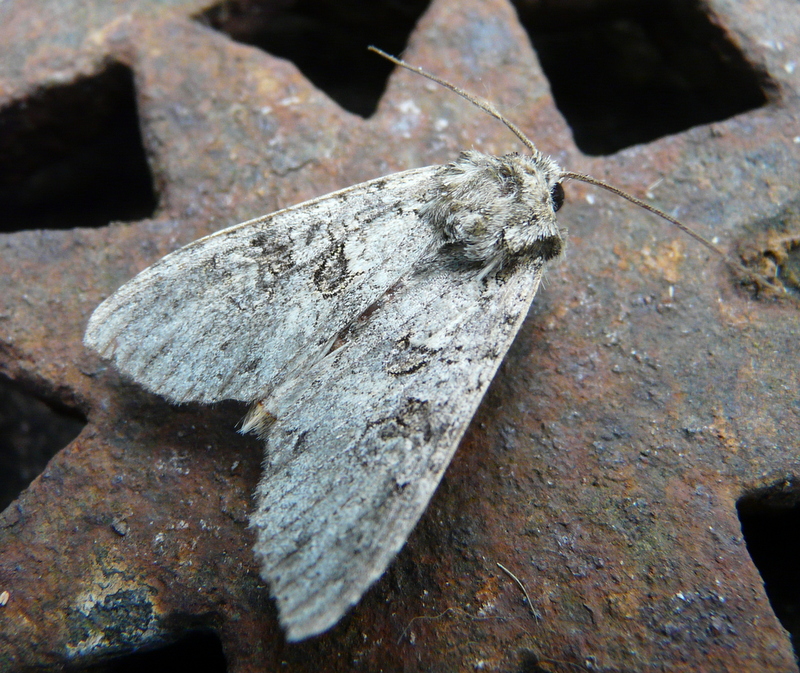
Kent Black Arches


Kent Black Arches - not especially rare but this is only the second one I've ever trapped - a smart little moth and the highlight this morning in an otherwise disappointing catch.
 
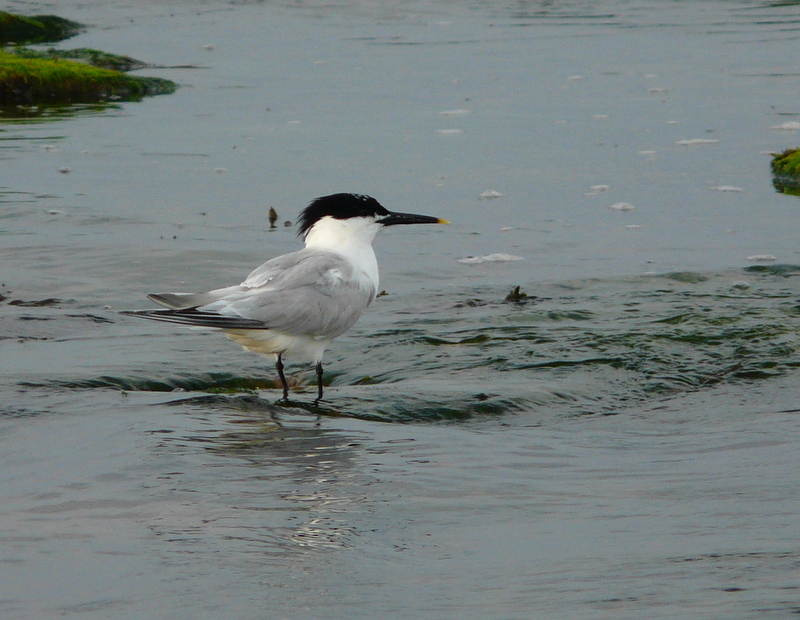
An early morning look off the Lifeboat Station produced 5 sanderling, 1 ringed plover, 1 common tern and 1 juvenile yellow-legged gull. A few sandwich terns were offshore but it was otherwise rather quiet. The moth trap was really low on numbers but that's hardly surprising given the clear sky and cool temperature last night.
In the estuary - 4 common tern, 3 dunlin and 1+ mediterranean gull.


Wax Moth - a large and unattractive 'micro'. Its larvae feed on honeycomb in beehives.


Black Arches - I had never noticed the rosy-pink tinges to the abdomen before this morning.


Four-spotted Footman - this is a male. They look totally different to the females which actually have the four dots! The female, pictured below, was photographed a few years ago in the south of France. I don't think I've ever trapped a female.


A juvenile Yellow-legged Gull briefly inspects a fishing boat before drifting off east.


Juvenile Great Black-backed Gull - Exmouth Beach. This is the first juv I've seen this summer. No juv lesser black-backs yet but there are now plenty of juv herrings around.

Monday, 20 July 2015

Crescent Dart - New!


Broad-bordered Yellow Underwing - compare today's male with yesterday's female.
 
Yet another good night for moths. There were 12 silver y and a single rush veneer representing the immigrants. The rest of the catch, excluding those species photographed, included heart and dart, heart and club, coronet, double-striped pug, v-pug, elephant hawk, poplar hawk, common emerald, riband wave, common footman, dingy footman, rosy footman, cabbage moth, uncertain, rustic, clay, common/lesser common rustic, minor agg, buff ermine, nut-tree tussock, willow beauty, grey/dark dagger, buff arches, large yellow underwing, swallow-tailed moth, peppered moth, pale mottled willow, snout, fan-foot, spectacle, light arches, poplar grey, lychnis, flame, flame shoulder, early thorn, clouded border, yellow shell, garden carpet, setaceous hebrew character and small fan-footed wave.
 

Pebble Prominent
 

Crescent Dart - another new moth for me.


Ruby Tiger


Ear Moth Agg - possibly Saltern Ear.


Shark - note the two strong zig-zag lines on the forewing.


Oak Nycteoline - one of two trapped last night.


Dark Arches - one of the most numerous moths around at the moment.


Grey Arches - just like the buses...........


Brussels Lace
 

Above - Toadflax Pug and below - Foxglove Pug - two potential confusion species, but note Toadflax Pug's deeper colouring and the shape of the grey central cross-band - kinked near the leading edge in Foxglove Pug, curved in Toadflax.

Sunday, 19 July 2015

Grey Arches


First-summer Mediterranean Gull - Maer Rocks (yesterday)
 
Quiet again on the bird front. This morning off Maer Rocks just 2 common sandpiper, 2 juvenile little egrets and 6+ manx shearwater. There are still small groups of common scoter knocking around and, of course, still a few mediterranean gulls. Yesterday morning there was a redshank and a dunlin on Maer rocks and 2 knot were off the Imperial along with a single bar-tailed godwit.
Moths are still providing interest. Last night I trapped my first ever grey arches amongst good numbers of other common stuff.


Juvenile Mediterranean Gull


Sandwich Tern - c40+ off Maer Rocks this morning.


A worn Grey Arches. Apparently a common moth but this is a first for me.


Swallow Prominent


Broad-bordered Yellow Underwing


Buff Arches


Small Dusty Wave
 
 
Thanks once again to Lee Collins for providing the info on this Darvic-ringed adult Common Gull - EAFH. I first saw it and photographed it 3 days ago off Mudbank. It was ringed as a pullus in Moerdjik, Holland in July 2008. It was seen again three times in Holland in July 2013. Lee had it at the Warren in July 2011, three times in July 2013 and twice in July of this year. Lee assumes that it breeds in Holland and migrates over here post-breeding each year. There is definitely some sort of pattern to its movements. I saw what was presumably the same bird (a white-ringed adult) distantly this morning from the Imperial. There was also a white Darvic-ringed second -summer mediterranean gull present.

Friday, 17 July 2015

Nut-tree Tussock


Nut-tree Tussock


Chinese Character


Yellow-tail


European Corn-borer

Thursday, 16 July 2015

Wader Increase


Ringed Common Gull - left leg - white Darvic ring - EAFH/right leg - metal ring. One of 3 adult common gulls off Mudbank this afternoon.
 
Off the Imperial first thing this morning - 12 dunlin, 1 greenshank, 6 redshank, 6 black-tailed godwit, 14 whimbrel, 210+ curlew and 1 bar-tailed godwit. Also at least 12+ sandwich tern and 4+ mediterranean gull.
Off the seafront - now 3 arctic skua (2 pale, 1 dark), c20+ sandwich tern, 2+ common tern, 5 mediterranean gull and a noticeable build up of common scoter with c100+ in fragmented groups around the bay.
Also of note today, a rufous cuckoo flew over the Devon Bird of Prey Centre near Ipplepen. I couldn't tell if it was a juv or a rufous female.

Wednesday, 15 July 2015

Wow Factor YLG!


At last - an obliging juvenile yellow-legged gull. Knowing that the beach would be busy I very nearly didn't check it, but sat amongst the many people enjoying the evening sun, close to the Lifeboat Station, was a small group of large gulls and with them, this beauty. It tolerated a close approach and even wing-stretched for me. A wonderful encounter. As with med gulls, I just can't tire of seeing these birds.


Two New Pugs!


Leopard Moth
 
Two brand new moths last night - slender pug and toadflax pug. Neither species is particularly rare and it would have been easy for me to overlook both in the past, especially worn individuals. Once the scales have worn off, one pug looks very much like another! Otherwise it was another good night numbers-wise. The catch included 2 brussels lace, several v-pugs, rosy footman, scarce footman, buff arches, july highflyer, 3 brown-tail moth, white satin, cabbage moth, swallow-tailed moth, elephant hawkmoth, barred straw, coronet, common footman, heart and dart, dark arches, common emerald, single-dotted wave, small dusty wave, spectacle, smoky wainscot, uncertain, heart and club, dagger agg, minor agg, sycamore, garden carpet, double-striped pug, buff-tip, scalloped oak, blood-vein, small magpie, large yellow underwing, flame, flame-shoulder, bright-line brown-eye, clay, fan-foot, small fan-foot, common/lesser common rustic, clouded border and a whole heap of other common species.
Bird-wise, I somehow managed to see the gull-billed tern from a mini-bus as I headed over the Teign towards Ipplepen for a school trip to the Devon Bird of Prey Centre! It was around 0940 and I could see it hawking over the channel opposite the pub as two birders tracked it with their bins! Very unsatisfying as far as views go though!
Early yesterday morning I had a look off Maer Rocks and recorded 7 mediterranean gulls, the 2 arctic skuas, 23+ common scoter, 1 juv yellow-legged gull and 6 mute swan that flew past and landed off the Warren. Later there were 5 mediterranean gulls, 4 whimbrel and 3 canada geese off Mudbank.
 

Pale Mottled Willow - one of two trapped.


Dot Moth - a nice fresh one and the first I've seen for some time.
 

Slender Pug - a freshly-emerged individual showing the beautiful but subtle patterning on the wings.


Marbled Green - two of these in the trap last night. A common species but always a joy to see.
 

Muslin Footman


Lychnis - one of two trapped last night.


Small Blood-vein


Toadflax Pug - a long-awaited first for me.


Carcina quercana - one of the more distinctive micros.


Haworth's Pug - a worn one but note the orange 'belt' around the abdomen.


Slender Pug - a different individual to that pictured above.
 
 
Engrailed - this and Small Engrailed are very difficult to separate but this should be a second generation Engrailed according to the flight times of the two species. Small Engrailed has only one generation and is on the wing from May - mid June.
 

There are still plenty of Mediterranean Gulls around. Never tire of them though.