Wednesday, 26 July 2017

Gropper and Questionable YLG


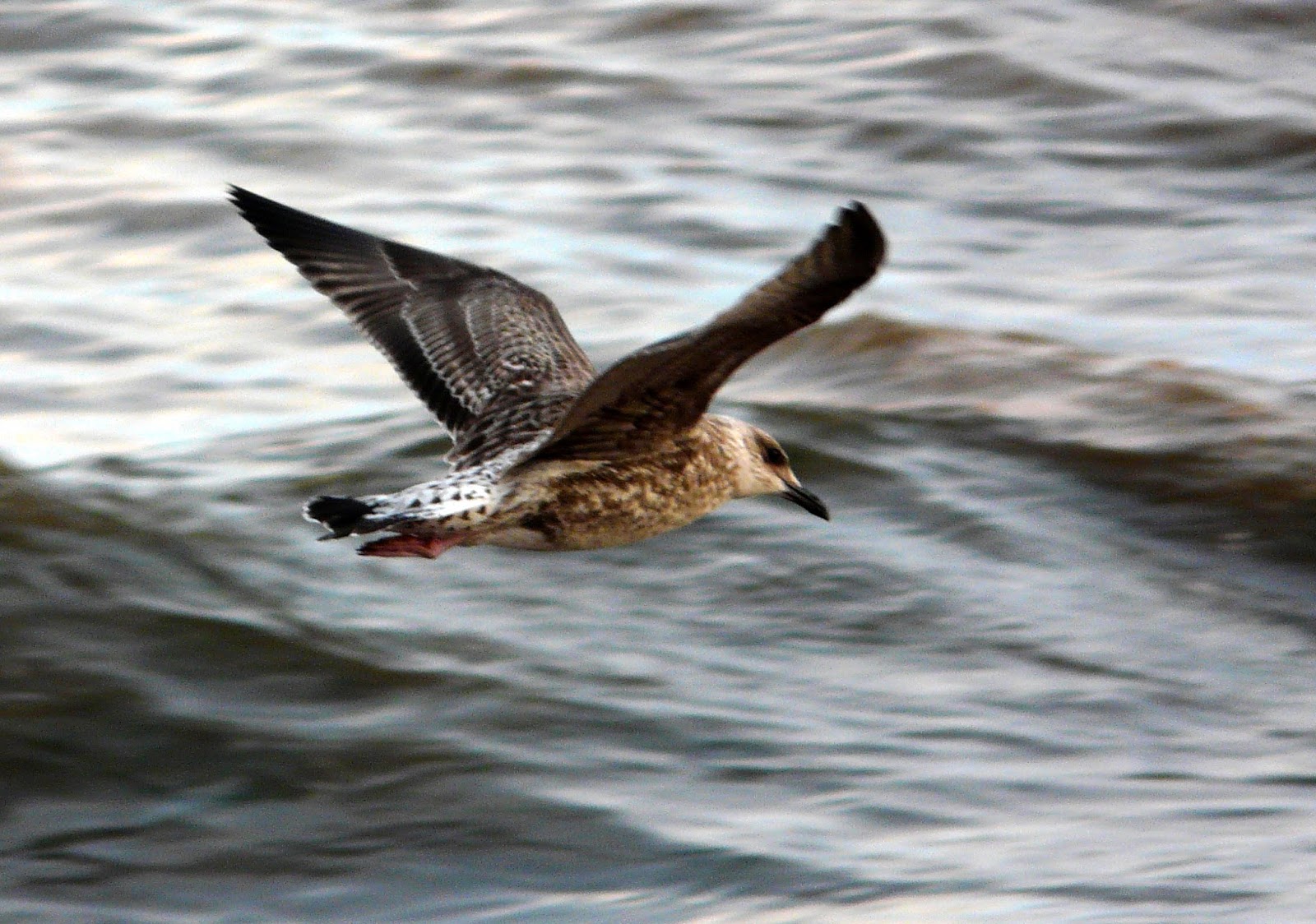
I'm really not keen on this bird. I suppose it has to be a juvenile Yellow-legged Gull but there are several niggles for me and I'd be interested to hear other peoples' opinions. The first impression for me was of a grey, fairly standard-looking Herring Gull. It was only when I saw the tertials that I realised I needed to scrutinise it further. Viewing was hampered by low light levels and heavy rain, which may account for the lack of contrast normally shown for YLGs, so I just rattled off a load of photos and tried to get flight views. Once in the air it seemed fine for YLG - bright white tail base with a neat jet-black tail band and nice dark wings with a faint inner-primary window - completely wrong for both Herring and Lesser Black-backed Gull.
Structurally it's arguably a better fit for Lesser Black-backed gull - small size, small bill and long wings, but flight views ruled that out. There are no newly moulted scapulars, the greater coverts aren't the best and there's a bit too much of a buffy wash to the wing coverts for my liking. Further more the legs look dull, but again this could be down to lighting conditions. I could be over-thinking this bird but I suppose it has to be YLG.
Offshore I managed just 1 Mediterranean Gull, 1 Little Egret, c20+ Common Scoter and 5 Common Tern. A Redshank and Whimbrel touched down briefly on Maer Rocks.
Mudbank produced c20+ Common Tern, eight Mediterranean Gulls, a Common Sandpiper and a Teal amongst 60+ Mallard.
My first autumn passerine migrant was a Grasshopper Warbler - a typically skulking individual up on Orcombe Point, near the Geoneedle - seen several times but never still long enough to photograph.


This photos shows there are in fact dark bases to the greater coverts and the tertials are dark with limited pale markings around the tips. Better for YLG than Herring and Lesser Black-backed.


In this appalling shot you can see a faint 'window' in the inner primaries and a dark bar in the wing created by dark bases to the greater coverts. The tail area is good for YLG.


Little Egret - Mudbank

 
 Teal with Mallard. It's always good to see wildfowl numbers starting to build at this time of year. Large numbers of Mallard always harbour the possibility of something else in with them.
 

Tuesday, 25 July 2017

Gem, Balearic Shearwater and Arctic Skuas

 
Gem - an immigrant species that I get occasionally but usually in the autumn. Other immigrants last night included a couple each of dark Sword Grass and European Corn-borer, Silver Y and Rusty-dot Pearl.
 
Despite fine conditions and a near flat-calm sea, there were a few birds offshore early this morning. In a half-hour spell I recorded 3 Arctic Skua, c70+ Manx Shearwater (rafting in the bay), 1+ Balearic Shearwater, 7 Common Tern, c10+ Sandwich Tern, 27 Common Scoter, 1 Little Egret, 1 Curlew and 13 Canada Geese.
In the estuary there were up to a dozen Common Tern and a small number of Mediterranean Gulls.
Around midday I went for a run up on the common with the dog. There were only about half a dozen gulls on Blackhill Quarry but one was a juvenile Yellow-legged Gull. I contemplated running back to the car for the camera but decided against it.
 

3 Arctic Skua 'dots'. They hammered into the bay, showing only minimal interest in the terns before vanishing.

 
Flame Carpet


Magpie


Maple Slender - Caloptilia semifascia - the larvae feed on Field Maple but I'm struggling to think where the  nearest maples are to me.

 
Sycamore Piercer - Pammene aurita

Monday, 24 July 2017

Insect Fest


Shaded Broad-bar
 
Shaded Broad-bar and Magpie amongst a small collection of common moths in the trap last night.
Very little birding done today but another juvenile Yellow-legged Gull landed briefly on the beach, early morning, before heading for the river mouth. No photo unfortunately. The day's highlight was an hour spent looking for insects in a tiny area at the top of Bystock meadow. I would of course appreciate help with identifying stuff.


Micro sp


Grey Gorse Piercer - Cydia succedana


Knapweed Conch - Agapeta zoegana


Pearl Veneer - Agriphila straminella


Presumed Ribwort Slender - Aspilapteryx tringipennella


Syncopacma sp

 
Marbled Conch - Eupoecilia angustana
 

Meadow Brown


Large White


Gatekeeper

 
Common Blue
 
I photographed the following seven species of hoverfly and I've no idea what any of them are. The Ragwort at Bystock is a huge draw for insects.


Bee sp

 
This neat little bee has emerald-green eyes. It was easy to keep track of with its high-pitched buzz.
 
 
I'm not even sure what family of invertebrate this belongs to. Edit - it's a Cockroach species - apparently one of three native species found on the Pebbled Heaths - many thanks toTim for his help.
 

Sunday, 23 July 2017

Roseate Tern

 
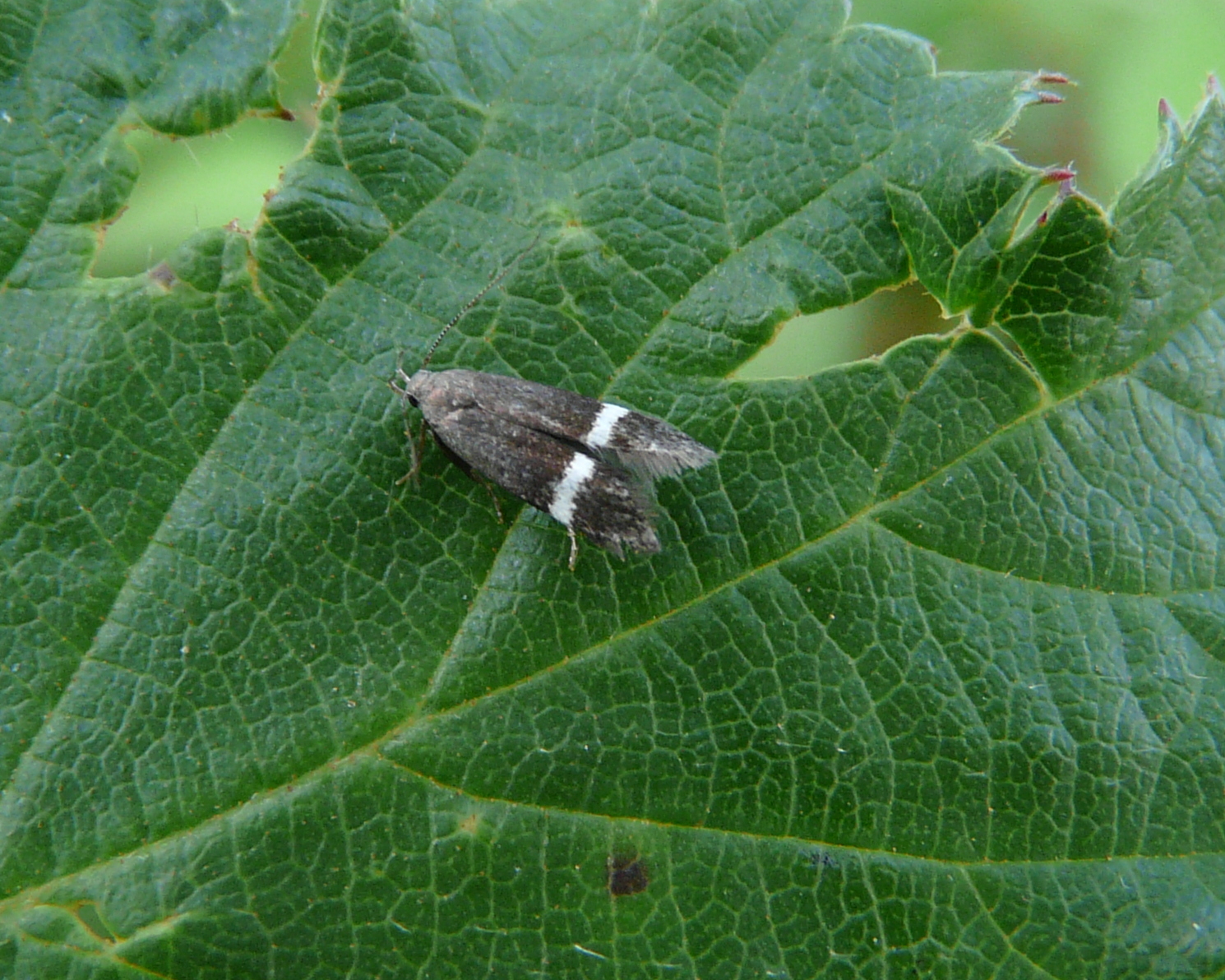
Edit - Caloptilia rufipenella - According to UKMoths this species was first discovered in Britain in 1970.It is evidently quite variable in appearance but note the narrow white strip on the blackish-looking forelegs. Thanks to Nick for helping to suss this one out. By the way if anyone knows the new English name for this species I'd be grateful.
 
Nothing too out of the ordinary in the trap last night, but immigrant species included 7 Silver Y, 1 Dark Sword Grass and 4+ Rusty-dot Pearl.
Most of the day has been taken up with football, but a quick look off Mudbank produced 9 Mediterranean Gull, 2 Common Sandpiper, 26+ Whimbrel, c50+ Sandwich Tern, 1 Common Tern and 17 Mallard.
The day's highlight was the Warren's Roseate Tern that was feeding around the buoys off the seafront early evening. A big thank you to Lee for the text, which allowed me to finally catch up with this bird that has been playing 'cat and mouse' with me for a couple days now.

Saturday, 22 July 2017

Herring Gull-like YLG

 
This bird didn't immediately jump out at me as most juvenile Yellow-legged Gulls do. A relatively grey-looking and non-contrasty individual, with fairly openly patterned greater coverts and even some pale indentations in the tertials. It looked better in flight. Only present for about a minute.
Otherwise 4 Sanderling on the beach and at least 3 Mediterranean Gull offshore.
 

Friday, 21 July 2017

YLG


Sanderling
 
I was awoken by the wind rattling the windows and got down to the raised beach huts some time after 0530. It was soon apparent that plenty of Manx Shearwaters were passing. I fairly quickly picked up a group of at least 4 large shearwater sp but they were a long way out and I just couldn't get any detail on them. I decided to relocate to Orcombe Point but I didn't have enough time to give the sea a good look. Texts from Lee indicated that both large shearwater species were passing the Warren. Had it been tomorrow things may have been different but I had to get to work. By the time I finished work and got a few jobs done around the house, things had quietened down.
 A quick check of the beach produced a couple Mediterranean Gull, 1 Sanderling and a juvenile Yellow-legged Gull.
There were at least 50 Sandwich Tern, 4 Mediterranean Gull, 30 Turnstone, 12 Whimbrel and 1+ Greenshank off the Imperial.

 
Juv YLG with a juv Herring Gull in front of it. I've spent far less time looking for these than I normally would but the moths are proving a far bigger draw.


Thursday, 20 July 2017

A Big Thank You!


In twenty years of teaching I've never received such a fantastic present. I was stunned to be given this today and can honestly say that it has been top of my list of books to buy for ages. A massive thank you to Finley, Rachel, Isobel B, Isobel D, Sam D and Elliot. I can't tell you how chuffed I am.