Monday, 24 October 2016

Soar


I spent the day down at Soar with my brother. It was fantastic to spend time with him, as it always is, but the weather wasn't particularly kind to us. We spent the first hour of daylight sheltering in the car as the rain lashed down, and consequently, with the radio and heaters on, ran the car battery flat. The rain continued the whole day although there were periods when it eased off enough to see a few birds. I suspect there was some really good stuff waiting to be found (Perry had Pallas's Warbler and Lesser Whitethroat at Start) but we managed to see 3 Black Redstarts, 3 Firecrests, 2 Blackcaps, 4 Snipe, 1 Redwing, c10/15+ Song Thrushes, c50+ Robins, 5+ Chiffchaffs, 6+ Goldcrests, 6+ Stonechats, c30+ Starling, 1 Brambling, c50+ Skylarks and 10+ Long-tailed Tits.


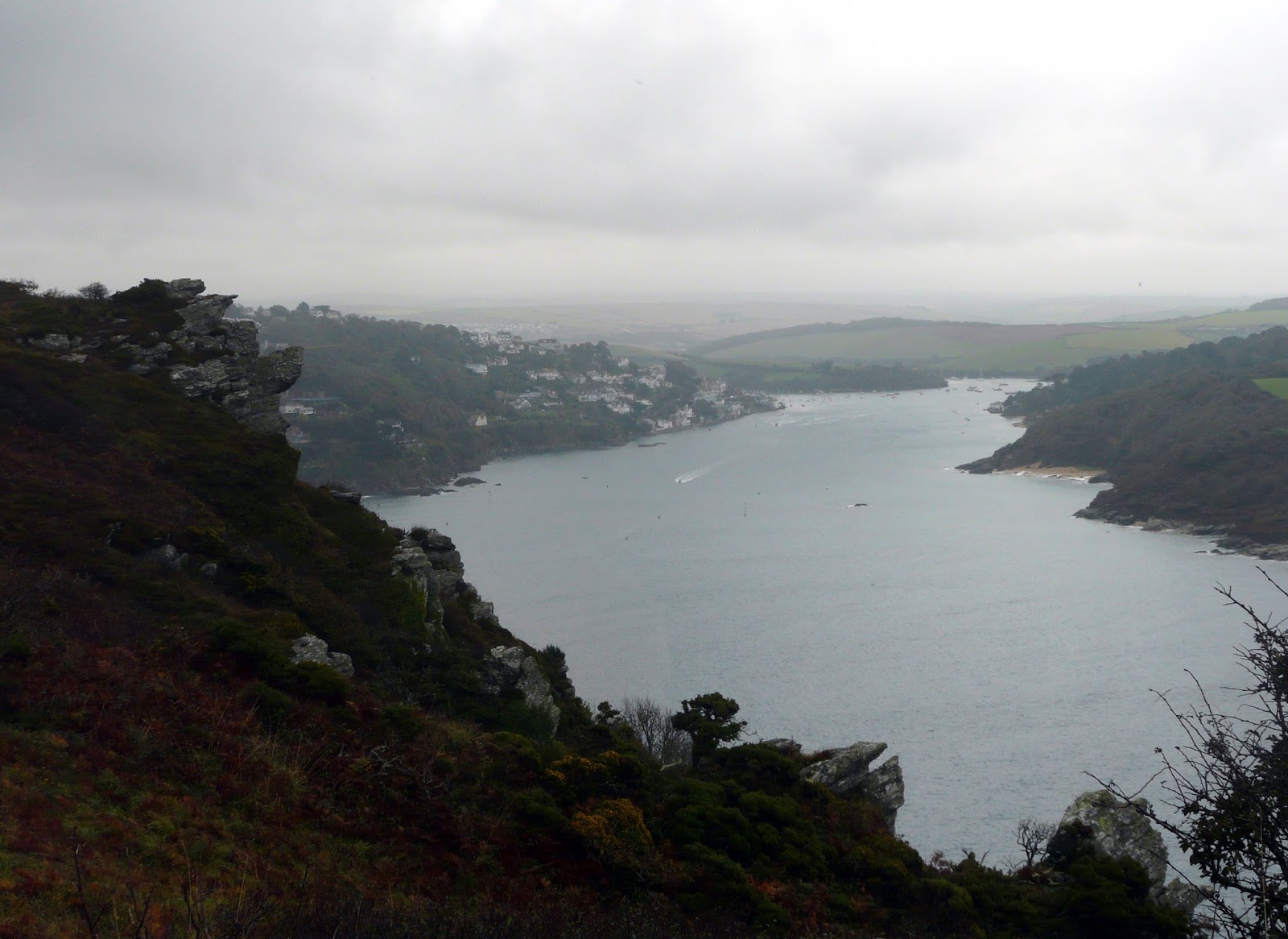
The view towards Salcombe from Sharp Tor


Black Redstart - one of three seen today.

Sunday, 23 October 2016

Black Brant and Firecrest


Black Brant with Dark-bellied Brents. I've 'found' this presumed returning adult Black Brant three autumns on the trot, but it's still not on my self-found list. I'll probably do a post on my fussy personal self-found rules at some point. Ivan Lakin first had it at the Warren four years ago. It's a very smart bird but a complete pain to pick out amongst c900+ Brents. I suspect it has been around a while as last year I first had it on October 4th.

Nick and I did Orcombe from first light. It was a bit too windy but we did dig out 1 Redwing, 5+ Song Thrushes, 1 hirundine sp, 2 Fieldfares, 1 House Martin, 1+ Siskin, 2 Chiffchaffs, 4 Goldcrests, 1 Grey Wagtail, c50+ Starlings, 1 Green Woodpecker, 1 Great Spotted Woodpecker, 1 Kestrel and small numbers of Pied Wagtail, Meadow Pipit, Linnet, Woodpigeon and Goldfinch.
A couple minutes of 'pishing' the sallows bordering the Maer Long Stay carpark enticed the autumn's first Firecrest out in to the open.
Mudbank was heaving on the incoming tide. I counted the easy stuff but couldn't even contemplate counting the Wigeon. Fantastic numbers and some great news with regards to all the wildfowl in Exmouth. Apparently we have 2 wardens who will be employed to minimise disturbance in this busy and highly important corner of the Exe. A HUGE well done to Rupert Ormerod and Derek Carter who have played no small part in making this happen.
Species noted included 23+ Redshank, 1 Black-tailed Godwit, 1+ Bar-tailed Godwit, 1 Lapwing, 16+ Knot, 165+ Turnstones, 13 Teal, 1 Pale-bellied Brent Goose and the Black Brant amongst c900+ Dark-bellied Brent Geese.

Saturday, 22 October 2016

Start Point


It's very rare that I venture out of Exmouth and very rare that I don't have to take Joel to football on a Saturday morning. I've been yearning to get down to the South Hams for some time so, with Lu and the kids busy doing other things, I headed down to Start Point under the cover of early morning blackness. It was a very chilly dawn and far windier than I'd expected, but it felt good to be back, birding in an area that I used to visit quite a bit.
The highlight of the morning was bumping in to Perry and spending some time catching up, whilst waiting for Yellow-browed Warblers to show in the farm. I can't remember the last time I saw him but I swear he hasn't aged!
There were a few birds around but nothing spectacular. Two Yellow-browed Warblers in the farm were the best but I was pleased to see my first 2 Fieldfares of the autumn too. Other species seen included c600+ Woodpigeons, 3+ Stock Doves, 11+ Stonechats, 1+ Siskin, 1+ Reed Bunting, 1+ Redwing, 4 or 5 Swallows and a few Goldcrests and Chiffchaffs. Overhead, small numbers of Meadow Pipit, Goldfinch, Linnet, Pied Wagtail and Chaffinch headed east into a stiff breeze. I missed Perry's Merlin but Peregrines were a constant presence throughout the morning and I had at least one Cirl Bunting.
After Start I walked from North Hallsands to Beesands Ley. I had good views of a non-calling Yellow-browed Warbler on the east side of North Hallsands reed bed and didn't notice any rings on it, so it was possibly not one of the two ringed by Alan Searle earlier in the morning. It was with a handful of Chiffchaffs and a single Blackcap. At least 1 Cetti's Warbler was heard and a male Cirl Bunting perched up in a nearby hedgerow.
Beesands Ley held 84+ Gadwall, a pair of Little Grebes and a single Tufted Duck.
All in all a very pleasant morning and a nostalgic one too. I have a lot of fond memories of birding in that neck of the woods and it was a pleasure to be walking alongside hedges that haven't been hacked to death and fields that haven't been over-farmed. It's still very unspoilt and is packed with birding potential. The only problem is that there is just too much good cover, so lots of stuff must inevitably get missed.

Friday, 21 October 2016

Quiet Week. Normal for October.


Wheatear - getting a bit late for these now.

My first Redwings of the autumn, of flock of at least 17 birds, flew north overhead as I walked to work on Monday morning. A flock of about 100 Linnets was on Orcombe Point the same evening. The following evening, 5 Stonechats were the only birds of note on Orcombe and yesterday a single Snipe, c60+ Meadow pipits and a Stock Dove were the only inclusions in my notebook. This evening the highlights were 2 Lapwings in the top fields, and a Wheatear.


Meadow Pipit - there are a few of these knocking around the top fields at the moment with at least 60 present on the 20th.


One of a flock of about half a dozen birds touring the Bristol Schools area at the moment.


At least one Kingfisher is seen regularly off Mudbank. It likes the partially submerged shopping trolley. The light has been too bad this week to see much else.

Sunday, 16 October 2016

Today's Stuff


Mediterranean Gull - lifeboat station - these have been a bit thin on the ground lately.
 
I watched the sea from first light, perched up beneath the raised beach huts. It was a bit disappointing to be honest - 1 distant skua sp, 1 Great Northern Diver, c50+ Common Scoter and a steady trickle of Gannets. Two separate Grey Plovers flew low across the waves towards the river mouth and another wader sp, possibly Grey Plover, was plucked out of the sky as it towered upwards, in panic,  by a male Peregrine that swiftly passed it on to a female - quite a spectacle! A single Mediterranean Gull was on the beach with a flock of Black-headed Gulls.
Late in the morning Lee called with news of a 'Baltic'-type gull on Bull Hill. I headed straight to the docks to scope it but it was asleep with its back to me and remained in exactly the same position for the entire time I was there. It certainly stood out, being a nice charcoal black on the upperparts. I went back again late afternoon and it was still there. Views were marginally better and at least it was awake and 'side on'. It certainly looked long-winged and if anything blacker in marginally better light. Size was difficult to judge as its legs and belly were obscured by an undulation in the sand, but Lee had better views from the Warren earlier, and was able to see that it was noticeably smaller than accompanying graellsii birds. I believe the BBRC still won't accept birds that aren't ringed. If anyone is going to get a ringed individual I'm sure it'll be Lee!
In the absence of any photo, below is a Baltic Gull that I photographed in Stockholm back in 2012. They are beautiful birds.


Baltic Gull - Stockholm August 2012
 

Looking towards Orcombe Point from the lifeboat station this morning.

Saturday, 15 October 2016

YBW and High Teal Count


Yellow-browed Warbler - the best of my paltry efforts to capture an image.
 
Paul Gosling and I were stood pitch-side early this morning, up at the archery club, when a Yellow-browed Warbler started calling. It was in a sunlit corner of the small  mixed copse that borders the archery club carpark, and we soon located it despite the imminent 'kick-off' of our sons' football match. It was a particularly vocal individual so it was easy pin down, but it kept in the tops of the trees so it wasn't easy to see or photograph. The archery club is on the edge of Exmouth, up high along the top edge of Withycombe Raleigh Common, so a fair way inland. There must be hundreds in little patches of suitable woodland around the country.
I headed out after the rain this afternoon to look at the wildfowl off Mudbank. Again, huge numbers were present but it was Teal that stole the show with a high count of 375+ easily the most I've ever seen in Exmouth. Also recorded, despite poor light conditions, were 11 Red-breasted Mergansers, a single Pale-bellied Brent Goose amongst several hundred Dark-bellied Brents, 9 Bar-tailed Godwits, 7 Black-tailed Godwits, 2 Great Crested Grebes, 1 Grey Plover, 1 Knot, 1 Greenshank and 7+ Redshank. I couldn't face attempting to count the Wigeon and Pintail that were strung out in dense flocks across a large part of the estuary.
Finally - decent counts of 60 Pied Wagtails and 40+ Common Scoters were made on the cricket pitch and off the seafront respectively.


Blackcap - Mudbank. Small numbers present along with small numbers of Chiffchaffs in the scrub belt between Mudbank and the train station.

Monday, 10 October 2016

Tawny Pipit


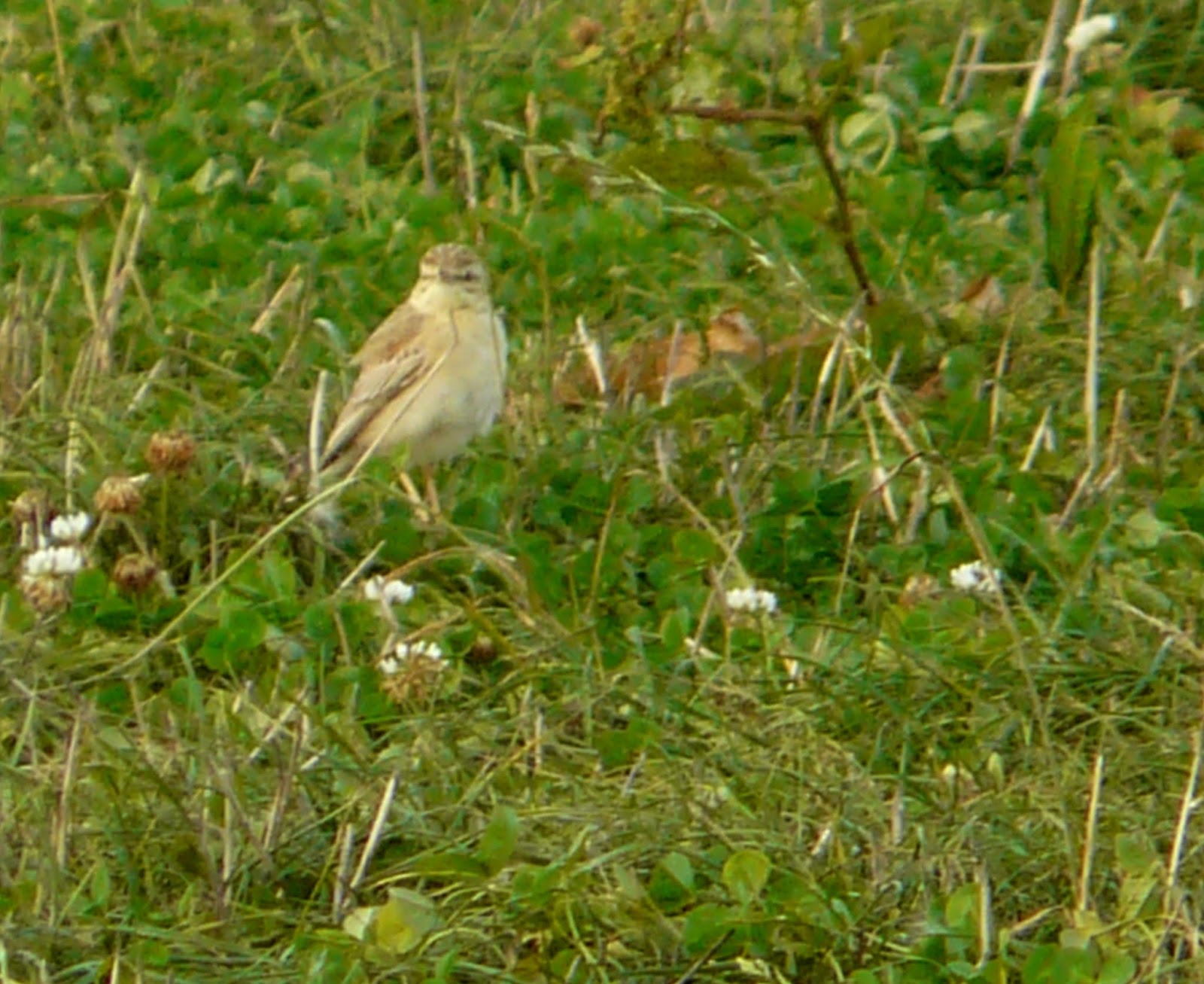
Tawny Pipit - strikingly similar to Yellow Wag front-on.

I walked home from school with Joel, dropped Maisie down at the gym and then headed up to Orcombe to do my quick circuit. I parked at the top of Gore Lane and walked into the big grass field with the dung in it (not the former 'dung field'). I walk this field pretty much every day during the autumn (with permission from the farmer) but it was clear straight away that there were more birds in there than usual this evening. A Linnet flock flew up and several Meadow Pipits took to the air. Over the noise of the many varied calls I could hear a 'chup' but I initially put it down to an odd calling Linnet. I looped around the top of the field and would normally have moved into the field on the opposite side of the road, but the odd call was niggling me. As I headed back through the field I again picked up the call, only this time it seemed more distinctive. I locked on to the bird just as it dropped in to the grass and was met with a pale 'blob'. I thought 'this is going to be Short-toed Lark' but realised the call was wrong. Crazy thoughts of Lesser Short-toed Lark entered my head but I knew this was fanciful. At this point I made the decision to go back to the car for the scope, as I didn't want to flush it. As soon as I found it in the scope I could see it was a Tawny Pipit, a new Devon bird for me and, as it turns out, Brian.
I stuck the news out and waited in the gateway for other birders to arrive. It showed well and, due to its paleness, was easy to keep track of. I did the initial check of the lores to rule out Blyth's Pipit but to be honest it was always going to be a Tawny, purely on the paleness and plainness of the plumage. Occasionally it would get spooked and get up and fly around - always uttering the loud and distinctive 'chup' but it soon settled and would call from the ground. It produced another sound that it is very difficult to describe - a weak, lark-like, faltering 'seeip' perhaps - quite odd and maybe part of a song?
I had to leave to go to the dentist just before 5pm but great to see Terry, Brian, Spencer and Chris before I left.
Also this evening - 3 Stonechats, 1 Wheatear, 3+ Chiffchaffs and the Yellow-browed Warbler in the usual spot.


Very plain underparts indicate this is an adult bird.


Crap photo but note the much darker and smaller Meadow Pipit in the background.


For a 'large' pipit this bird generally appeared quite small. This was partly due to the fact that it was always partly obscured by grass but also because it wasn't feeding alongside Meadow Pipits for most of the time.