Sunday, 9 October 2016

Autumnal Rustic


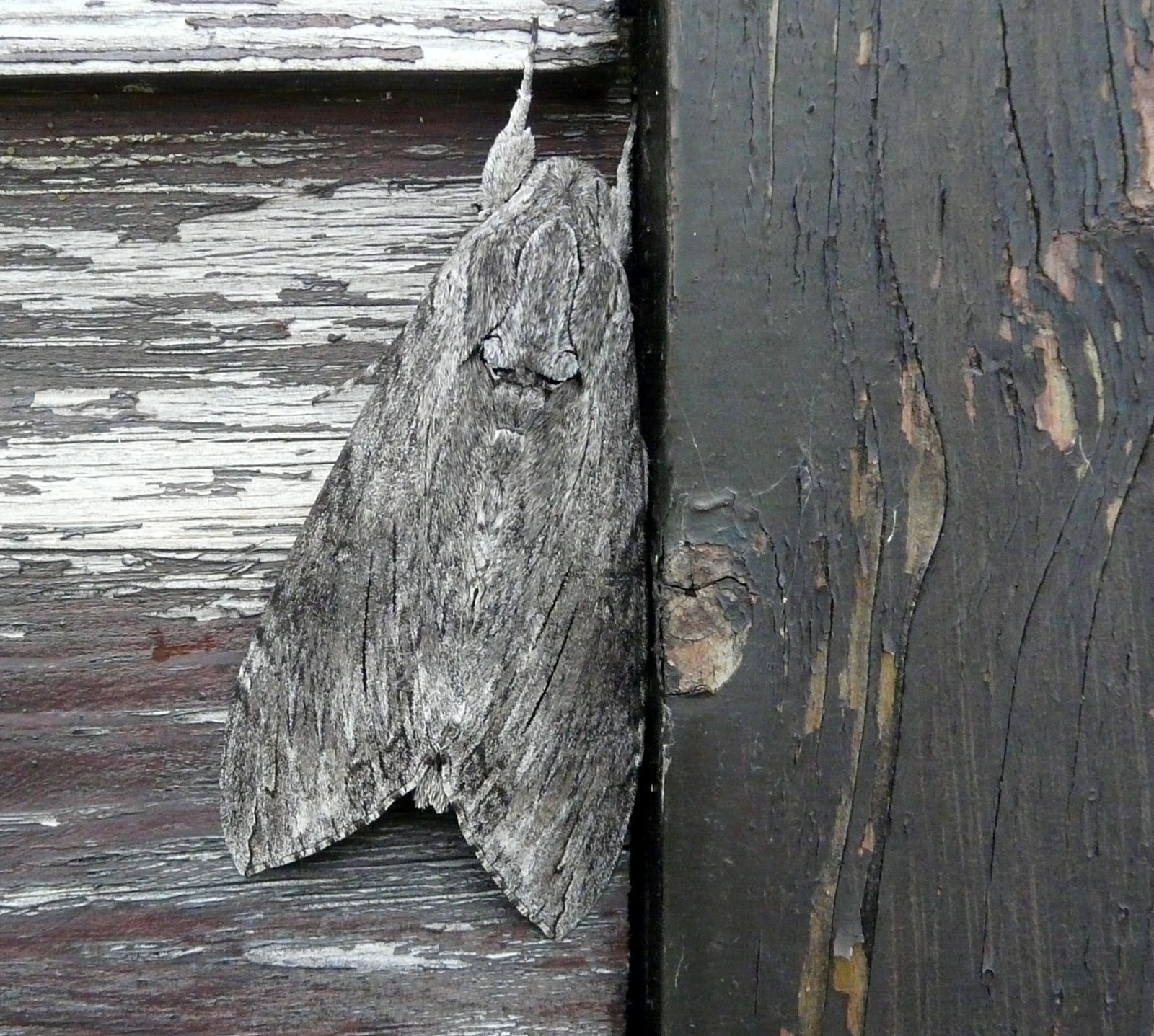
Autumnal Rustic - Martin Wolinski casually mentioned he'd trapped this species overnight as we spoke on the phone this afternoon. I've never seen one before so I was delighted when he said he was on his way in to Exmouth and that he'd bring the moth along. It's a beautiful moth and one that I wish I could trap here in Exmouth. I'm not sure how likely that is as its habitat preference is woodland and moorland. Still, you never know.........
 
Nick and I did Orcombe from first light this morning. Hopes were high for some overhead movement, with nice clear skies and a light north-easterly, but in the event it was very quiet. I went back up in the afternoon to meet up with Martin but very little was added. The totals for today include the Yellow-browed Warbler, c20/30+ Robins, 2 Grey Wagtails, c15+ Chiffchaffs, 3 Goldcrests, 2 House Martins, 19 Swallows, 3+ Song Thrushes, c15/20+ Blackbirds, 9+ Starlings, c20+ Pied Wagtails, several Meadow Pipits, Linnets and Goldfinches, 4+ Wheatears, 6+ Chaffinches, 3+ Blackcaps, 1 Stonechat, c20+ Skylarks, 11 Common Scoters, 1 Sandwich Tern and the 2 Eider.
The Yellow-browed was still in its preferred copse, just in on the left where the footpath to the Geoneedle starts. It was however very elusive, calling only occasionally and staying well hidden.
Good to see Martin and Andy Bond today and a very HAPPY BIRTHDAY to Nick! 

 
Many thanks Martin - a truly lovely moth.
 
 
The Eiders were close inshore when I looked this afternoon - just off the point. I was up on the cliff-top though so the photo is awful. Nevertheless it's the first time I've photographed this species in Exmouth. They're attracting quite a bit of interest as Eiders have been very scarce in Devon over the last couple of years. I think the last time I saw Eider in Exmouth was the drake that was present off the seafront in June 2014. I failed to find the drake Velvet Scoter that Dave had this afternoon (cheers for the call Dave) and Martin and Dave Hopkins had last week.

Saturday, 8 October 2016

White-speck, YBW, Eiders and Garganey


White-speck - an immigrant species and a long-awaited first for me. It's a 'Wainscot' which is my favourite group of moths so I was especially happy to find it in the trap, under the cover of darkness, at 6am this morning. The only other immigrant species were a couple Silver Y, 4 Rusty-dot Pearl, 1 Diamond-back and a single Olive-tree Pearl (Palpita vitrealis).
 
It's been an uncharacteristically productive day today. Before taking Joel to football in Feniton I hammered around the Orcombe patch (0700 - 0900). The highlight was a Yellow-browed Warbler that I picked up on call in scrub at the bottom of the Bristol Schools camp (it would have been audible and visible from the public footpath out to the Geoneedle). It showed briefly a couple times before vanishing. Also recorded - 3+ Goldcrest, 10+ Chiffchaff, 3+ Song Thrush, c20+ 'alba' Wagtails, 1 Kestrel, 5+ Stonechats, 1+ Siskin, 8+ Skylarks, 3 Starlings, 2 Wheatears, 4+ Blackcaps and 1 Grey Wagtail.
Joel's team comfortably beat Feniton and once home it was a quick lunch before dropping him at a  friend's party - an afternoon of 'Foot Golf' followed by a Mickey D's. Parties were never that good when I was a kid.
This afternoon I had a quick look off Mudbank. The wildfowl numbers off there are really impressive, which makes it a bit of a mission to sift through them all. I would estimate c2000+ Wigeon with c100+ Pintail mixed in, along with the odd Teal. Brent Geese must number 1000+ but there was no way I was going to try and count them. I did however manage to find a Garganey which is always a difficult bird to catch up with in Exmouth (no freshwater). I once had a spring pair fly in and land on the sea off the seafront, and I've had a couple autumn juveniles off Mudbank, but that's about it.
Also off Mudbank - 21+ Redshank, 1 Bar-tailed Godwit, 2 Whimbrel, 120+ Turnstones and 20+ Little Egrets.
Later on this afternoon I had another quick look at Orcombe. The Yellow-browed Warbler was seen again in scrub on the left where the footpath to the Geoneedle starts. There were 4 Turnstones on Maer Rocks and 16 Common Scoters offshore. Two female-type Eiders off the point were the first I've seen in ages. Let's hope they stay to winter!
 

Really good numbers of wildfowl off Mudbank at the moment. This is just a fraction of the flock.


Female-type Garganey. A very difficult species to catch up with in Exmouth.


Stonechat - at least 5 recorded today despite all hedgerows having been 'flailed' to death. Depressing stuff. The flail is indiscriminate. A large number of trees on Orcombe have literally been smashed to pieces. There should be laws against it. The photo below shows how the lower limbs of the trees are destroyed. Are there any agricultural gains to be made by this? There are certainly no environmental advantages. I would imagine this type of 'butchery' encourages disease.


Most bloggers would never dream of posting such a dreadful shot of a YBW but most bloggers have decent cameras! Believe it or not this is only the fourth YBW I've seen in Exmouth and only the second on Orcombe Point. I guess that tells you how good a headland it really is. Hard work.

Friday, 7 October 2016

Must be Loads Out There!


Convolvulus Hawk-moth - Bristol Schools camp. Birds still thin on the ground - 3/4+ Blackcap, c10+ Song Thrush, 4/5+ Chiffchaff, 2 Wheatears, 3+ Goldcrest, 2 Turnstone and 5 Common Scoter on a quick evening whiz round.

Thursday, 6 October 2016

Pearly Underwing


Pearly Underwing - the light 'biscuit'  variant and one of two trapped last night. Compare with the dark one below - Ed - didn't check underwing of this one and not certain id is correct. Does wing shape suggest Turnip Moth?

I can see the beauty in most moth species but this species is about as plain and uninteresting as they come. The lack of distinct oval and kidney markings is in itself an id feature, as is the pronounced grey-dusted 'mohican'. Confusion species include Turnip Moth and Dark Sword-grass (see bottom photos) but I almost overlooked the darker of the two as a Large Yellow Underwing. Pearly Underwing is an immigrant species but this is the first time I've recorded it in Britain, so it's a welcome addition to the garden list. It's not especially rare but it seems pretty tied to coastal migration hotspots like Portland. I'm really hoping for Radford's Flame Shoulder but I'd settle for a White Speck - probably the commonest immigrant species I still need. Otherwise last night's numbers were very low with just one Silver Y and a couple each of Rush Veneer, Rusty-dot Pearl and Diamond-back.


I was happy this was Pearly Underwing but nevertheless I was glad it let me gently shift the forewing to reveal the translucent underwing complete with black veins and pinkish-pearly sheen, from where the species obviously gets it's name.
 

Above - Dark Sword-grass and below Turnip Moth - two potential confusion species.


Wednesday, 5 October 2016

Migrant Insects


Gem - an immigrant species and one that I trap very infrequently. Other immigrants last night included Convolvulus Hawk-moth, 4 Rusty-dot Pearl, 2 Diamond-back Moth, 12 Silver Y and 15 Rush Veneer. Much bigger numbers than I've been getting of late.
 
Despite the stiff easterly that was rattling our windows last night I stuck the trap out in the relative shelter at the back of the house. As well as the aforementioned immigrant species I trapped Large Yellow Underwing, Lesser Yellow Underwing, Beaded Chestnut, Lunar Underwing, Shuttle-shaped Dart, Feathered Ranunculus, Copper Underwing, Sallow, Snout, Common Marbled Carpet, Black Rustic, Angle Shades, Light Brown Apple Moth and Ruddy Streak (Tachystola acroxantha).
As my year 8 classes are studying classification and variation at the moment, I decided to take some moths in to school. As you can imagine, the Convolvulus Hawk-moth went down a storm and I was thrilled that the other species generated plenty of interest too. It's amazing how much science you can get out of a small collection of moths! I ended up doing some 'moth work' with my year 10 and 11's too. I love my job at times!


Convolvulus Hawk-moth - it's been a great year for this species. Always an exciting discovery in the trap.


Rush Veneer - 15 trapped last night and numerous others 'kicked up' from grass on a windswept Orcombe Point this evening.


Silver Y


Diamond-back Moth - haven't seen too many of these since the spring 'mega-influx'.

 
Rusty-dot Pearl
 

'Helice' form of Clouded Yellow on Orcombe this evening. Difficult birding in strong wind with only 2 Stonechats and 2 Wheatears recorded on a lightning-quick visit.


Stacks of Red Admirals around at the moment.

Tuesday, 4 October 2016

Autumn Firsts


Blair's Shoulder-knot - a lovely moth and my first of the autumn. Other firsts included Red-line Quaker, Beaded Chestnut and Black Rustic. Other species included Turnip Moth, Lunar Underwing, Lesser and Large Yellow Underwings, Common Marbled Carpet, Light Brown Apple Moth and Southern Bell (Crocidosema plebejana). The only immigrants were 3 Silver Y, 2 Rusty-dot Pearl and 2 Rush Veneer.


Red-line Quaker


Turnip Moth


Beaded Chestnut


Black Rustic

Sunday, 2 October 2016

Orcombe This Morning


Clouded Yellow - my first on Orcombe this year - seen yesterday.
 
Nick and I did Orcombe Point this morning. It was a beautiful clear morning and consequently there was plenty of activity up there. Good numbers of Meadow Pipits were heading west/north-west the whole time we were up there with plenty of 'Alba' Wagtails, Goldfinches and Linnets on the move too, and lesser numbers of Chaffinches and Greenfinches. Also recorded - 13+ Chiffchaffs, 2 Goldcrests, 3+ Blackcaps, 8+ Siskins, 4 Grey Wagtails, 12+ Skylarks, 27 Swallows, 2 Wheatears, 1 Grey Heron and 2 Reed Buntings. The first 3 Stonechats of the autumn popped up and the first Redpoll headed north-west.


Small Copper - it seems to have been a good autumn for this species on Orcombe. I've seen higher numbers than usual.


White Wagtail - Exmouth Cricket Pitch - at least one present with c15+ Pied Wagtails, 2 Meadow Pipits and a Wheatear.